Root Cause Analysis: Solve the Problem, Not Just the Symptom   15-slide PPT PowerPoint presentation slide deck (PPTX)
$25.00

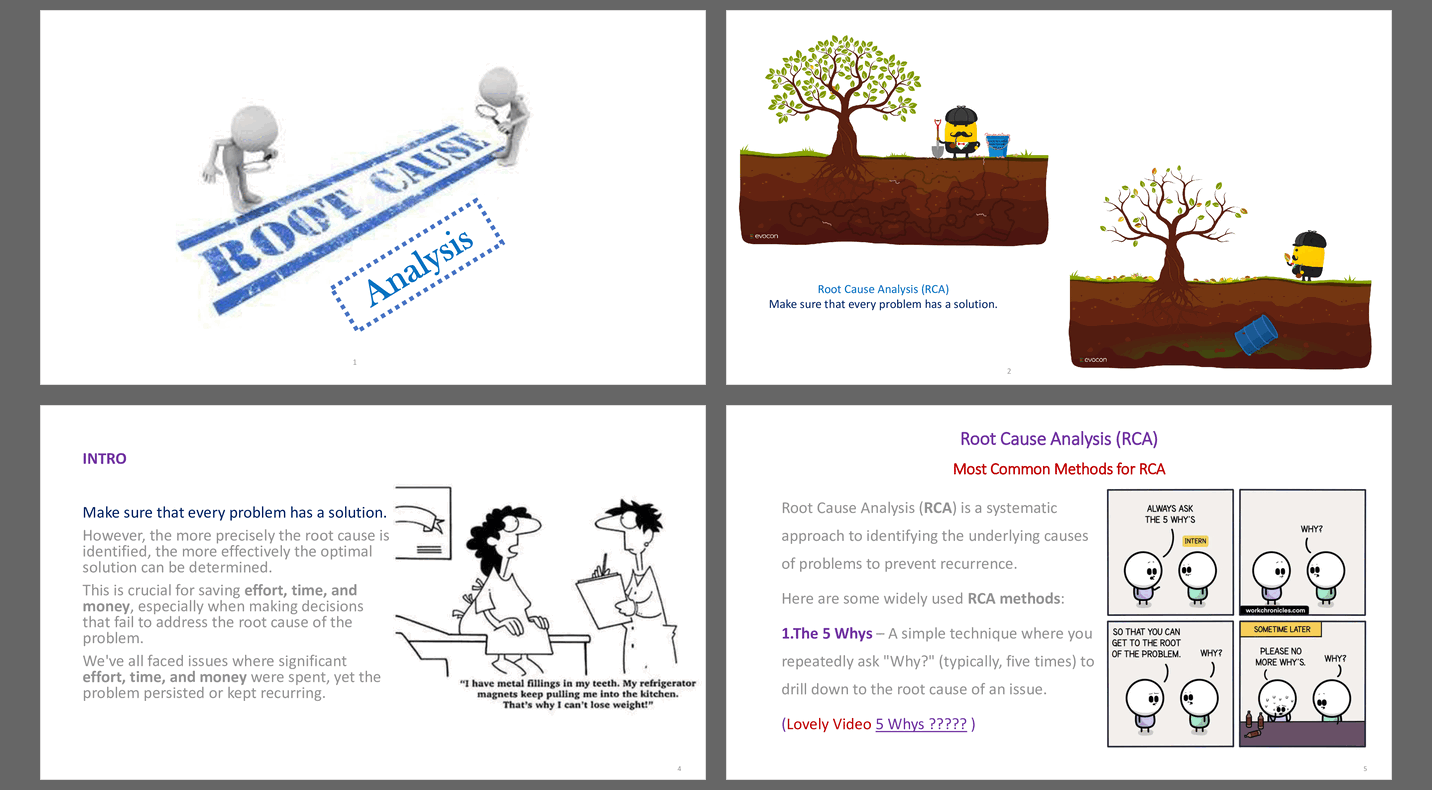
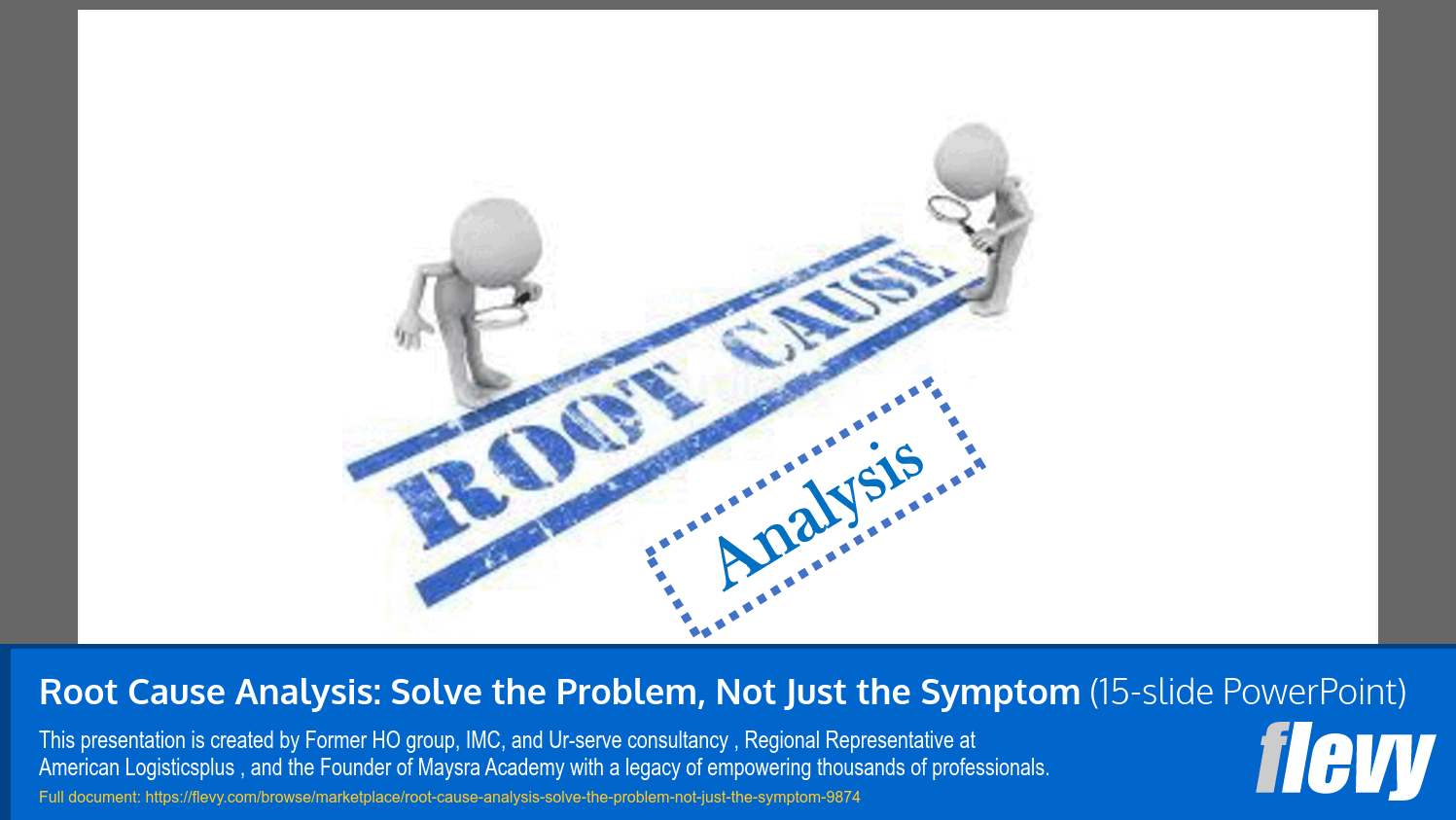
Root Cause Analysis: Solve the Problem, Not Just the Symptom (15-slide PPT PowerPoint presentation slide deck (PPTX)) Preview Image
Flevy is the marketplace for business best practices.
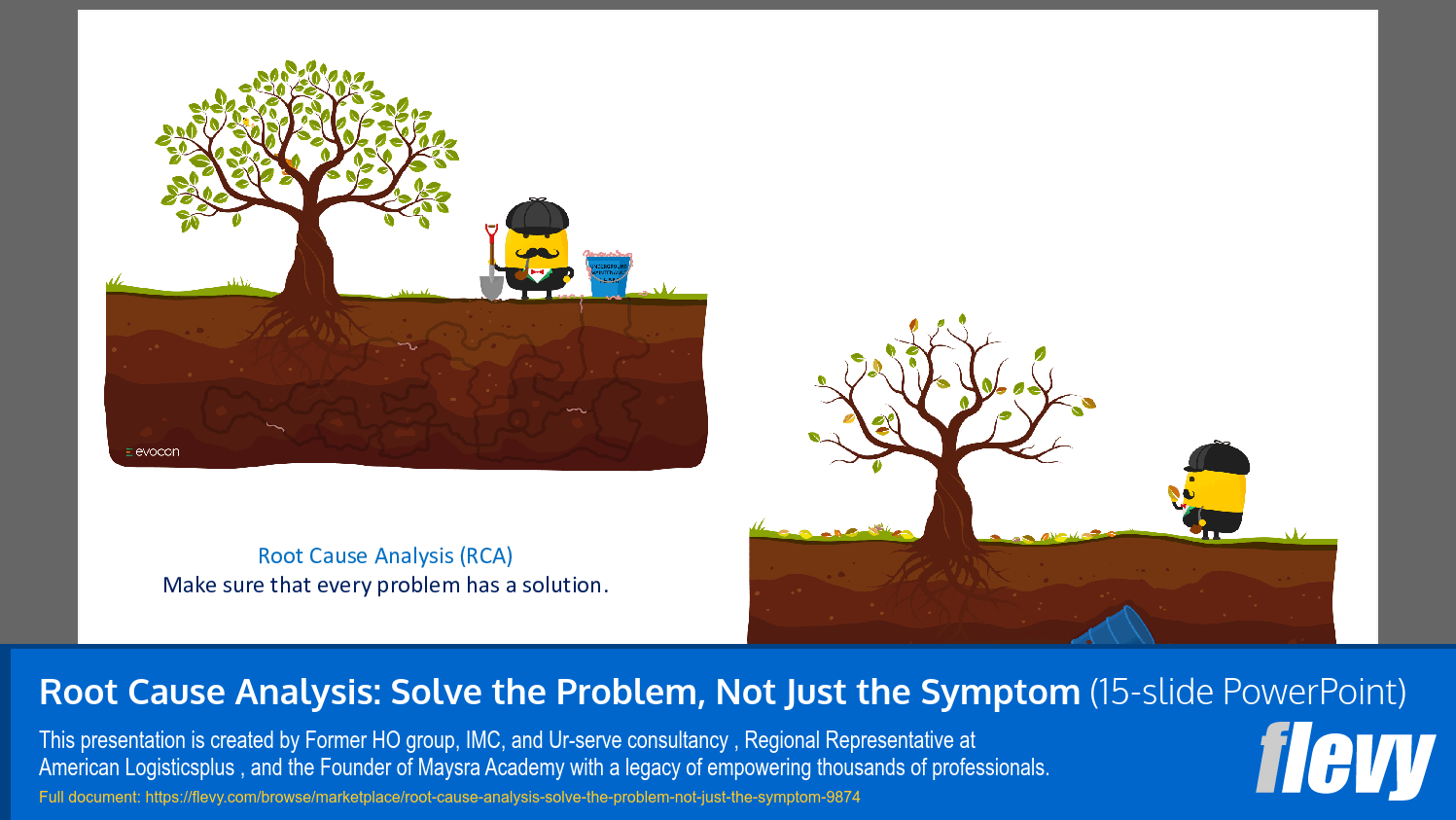
Root Cause Analysis: Solve the Problem, Not Just the Symptom (15-slide PPT PowerPoint presentation slide deck (PPTX)) Preview Image
Arrow   Click main image to view in full screen.

Root Cause Analysis: Solve the Problem, Not Just the Symptom (PowerPoint PPTX Slide Deck)

PowerPoint (PPTX) 15 Slides

$25.00
This presentation is created by Former HO group, IMC, and Ur-serve consultancy , Regional Representative at American Logisticsplus , and the Founder of Maysra Academy with a legacy of empowering thousands of professionals.
Add to Cart


Immediate download
Fully editable PowerPoint
Free lifetime updates

BENEFITS OF THIS POWERPOINT DOCUMENT

  1. Targets the real issue – Helps teams identify root causes instead of wasting time on symptoms.
  2. Boosts problem-solving culture – Encourages critical thinking and accountability across departments.
  3. Improves efficiency and performance – Reduces recurring errors and streamlines operations.

RCA PPT DESCRIPTION

Editor Summary 15-slide PowerPoint presentation "Root Cause Analysis: Solve the Problem, Not Just the Symptom" by Mohamed Abu Rahal Consulting providing a structured RCA framework and templates. Read more

"Don't treat the symptoms—solve the real problem."

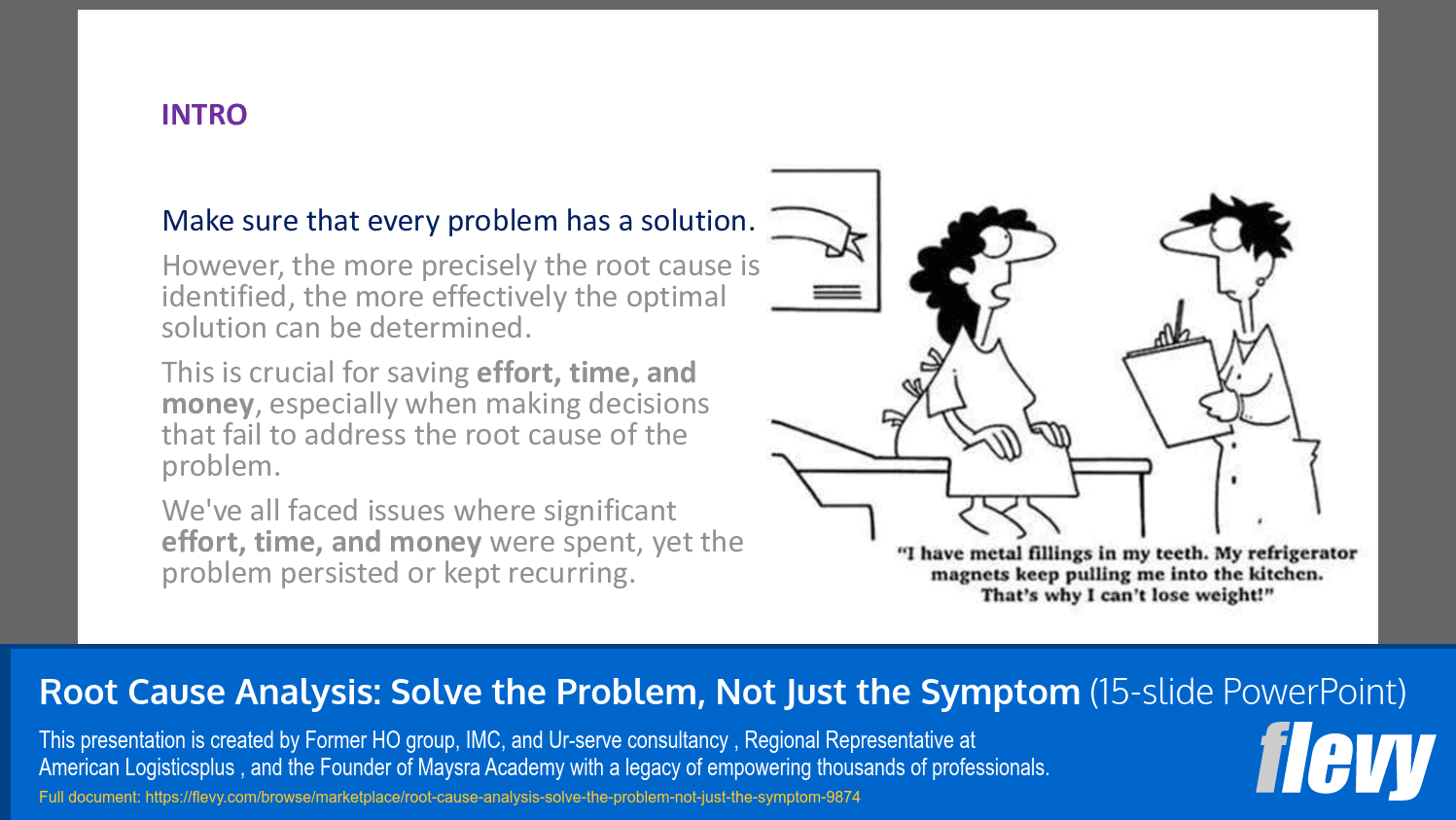
In business, recurring issues often signal deeper, hidden causes. This presentation empowers teams to move beyond surface-level fixes and uncover the true drivers behind operational, strategic, or performance-related problems.
Through structured techniques like the 5 Whys, Fishbone Diagrams, and Pareto Analysis, participants will learn how to diagnose challenges accurately and implement lasting solutions.
Ideal for:
•  Business leaders and consultants
•  Operations and quality teams
•  HR and training departments
•  Entrepreneurs and decision-makers
….and for ALL
You may apply it in your entire life !
Let your children grow up knowing this, it will make a difference.
"In life, as in business, solving problems at the surface only delays their return. Root Cause Analysis empowers us to dig deeper—to ask the right questions, challenge assumptions, and uncover what truly holds us back. When we identify the real cause, we stop reacting and start transforming. It's not just about fixing what's broken—it's about building what lasts."

Let's start saving more—money, effort, and time .

Got a question about the product? Email us at support@flevy.com or ask the author directly by using the "Ask the Author a Question" form. If you cannot view the preview above this document description, go here to view the large preview instead.

MARCUS OVERVIEW

This synopsis was written by Marcus [?] based on the analysis of the full 15-slide presentation.


Executive Summary
This presentation on Root Cause Analysis (RCA) provides a structured approach to identifying the underlying causes of problems, ensuring that solutions address the root issues rather than just symptoms. By employing various RCA methods such as the 5 Whys, Fishbone Diagrams, and Pareto Analysis, professionals can enhance problem-solving capabilities, ultimately saving time, effort, and resources. This practical guide is essential for teams aiming to implement effective solutions in their organizations.

Who This Is For and When to Use
•  Quality Assurance Managers focused on continuous improvement processes
•  Operations Managers seeking to enhance efficiency and reduce waste
•  Project Managers tasked with problem resolution and risk management
•  Team Leaders responsible for training and developing problem-solving skills

Best-fit moments to use this deck:
•  During team training sessions on problem-solving methodologies
•  When addressing recurring issues in projects or processes
•  In workshops aimed at improving operational efficiency

Learning Objectives
•  Define Root Cause Analysis and its importance in problem-solving
•  Build a framework for identifying root causes using various methods
•  Establish a systematic approach to prevent problem recurrence
•  Analyze case studies to apply RCA techniques effectively
•  Develop skills to facilitate RCA workshops within teams
•  Create actionable plans based on identified root causes

Table of Contents
•  Introduction to Root Cause Analysis (page 4)
•  Most Common Methods for RCA (page 5)
•  The 5 Whys Technique (page 6)
•  Fishbone Diagram (Ishikawa) (page 7)
•  Failure Mode and Effects Analysis (FMEA) (page 9)
•  Pareto Analysis (page 10)
•  Barrier Analysis (page 11)
•  Fault Tree Analysis (FTA) (page 12)
•  Affinity Diagram (page 13)

Primary Topics Covered
•  Root Cause Analysis Overview - An introduction to RCA, emphasizing its role in identifying and addressing the underlying causes of problems.
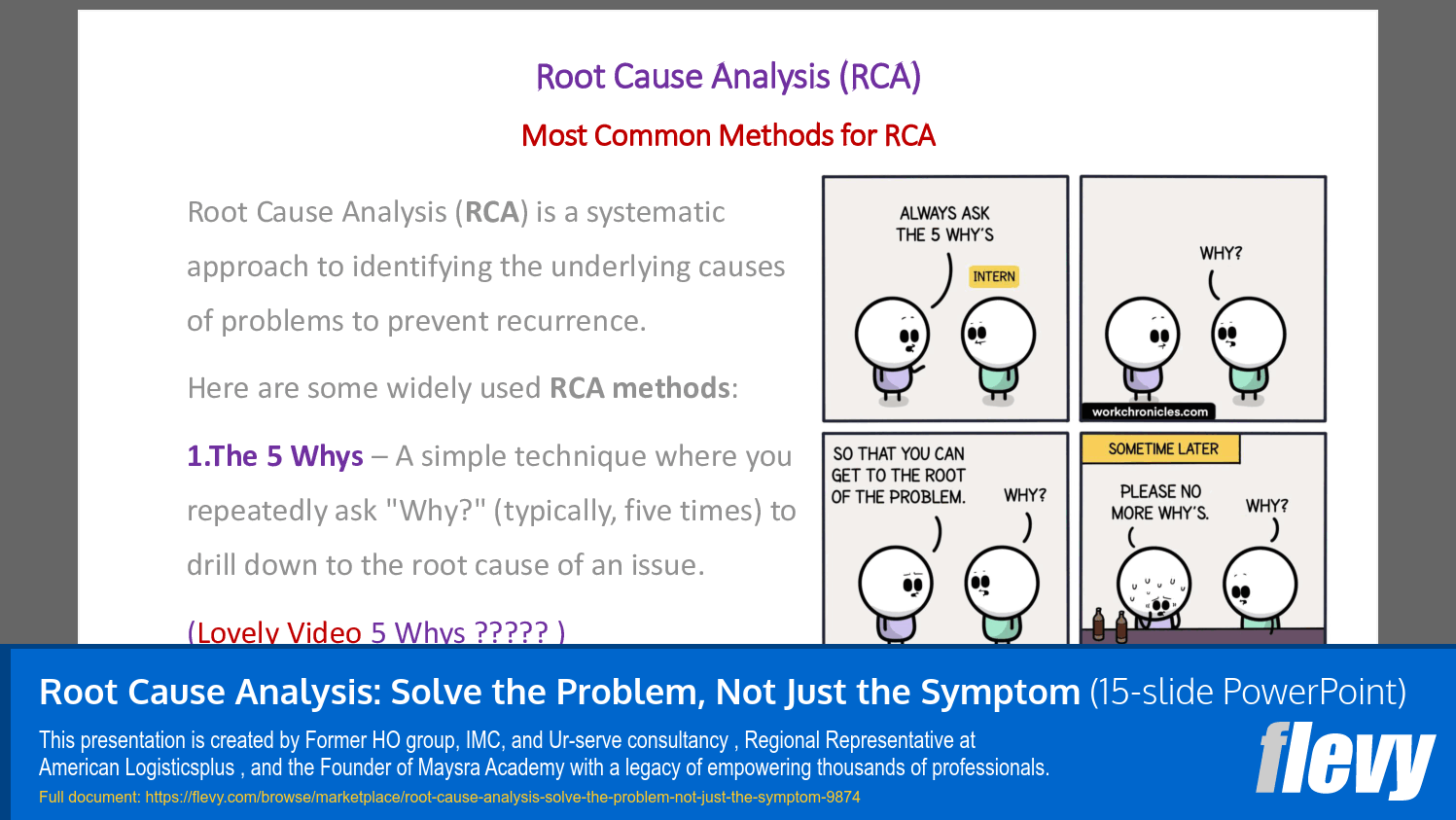
•  The 5 Whys Technique - A method that involves asking "Why?" multiple times to drill down to the fundamental cause of an issue.
•  Fishbone Diagram (Ishikawa) - A visual tool categorizing potential causes into groups to systematically analyze problems.
•  Failure Mode and Effects Analysis (FMEA) - A structured approach to identifying potential failure points and their impacts on processes.
•  Pareto Analysis - A prioritization technique based on the 80/20 rule, focusing on the most significant causes of problems.
•  Barrier Analysis - Identifying failed barriers that allowed problems to occur, enhancing safety and operational effectiveness.
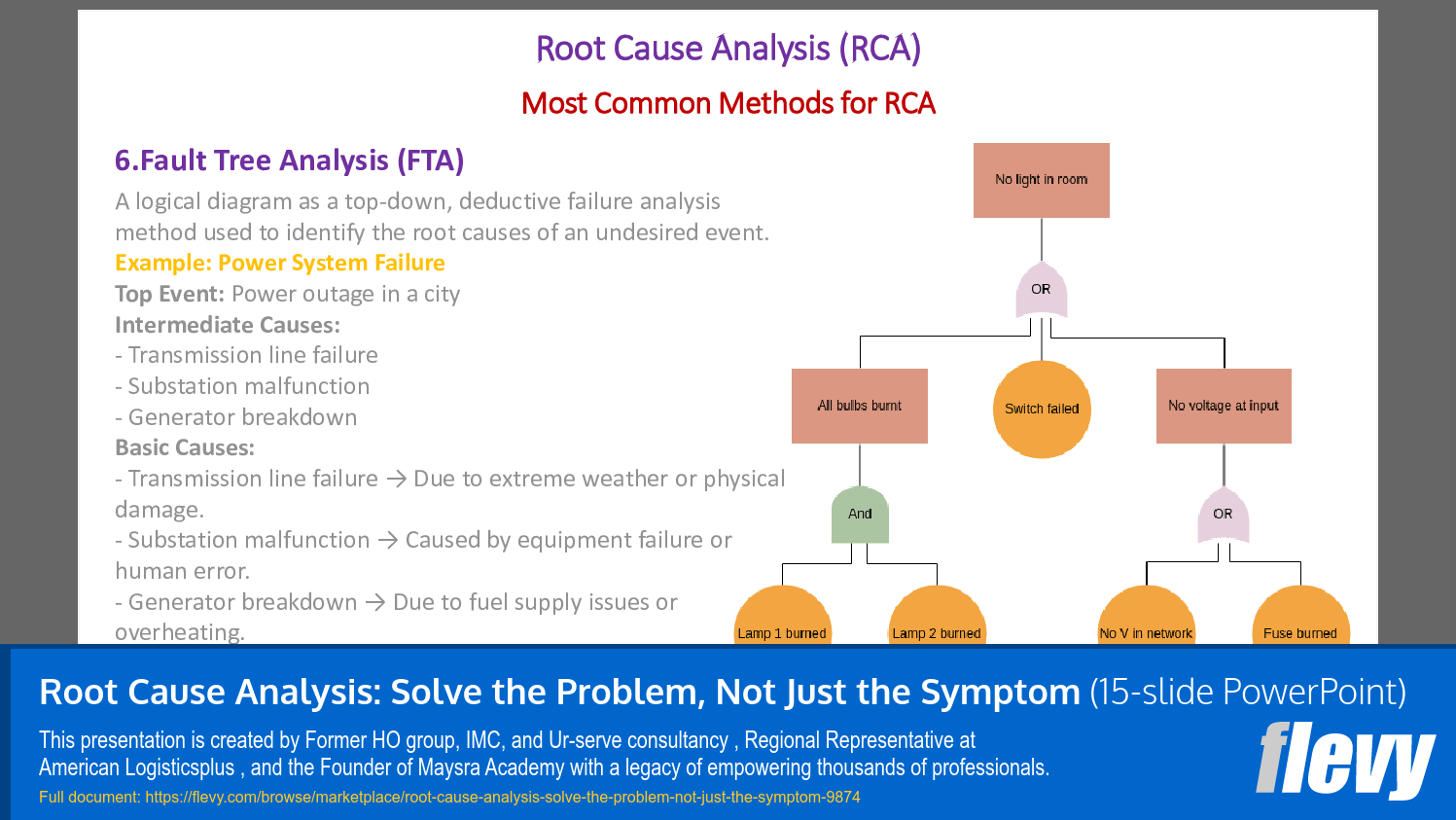
•  Fault Tree Analysis (FTA) - A deductive method used to identify root causes of undesired events through logical diagrams.
•  Affinity Diagram - Organizing data into meaningful categories to identify patterns and prioritize solutions.

Deliverables, Templates, and Tools
•  RCA framework template for systematic problem-solving
•  5 Whys worksheet for documenting inquiries and findings
•  Fishbone Diagram template for visualizing potential causes
•  FMEA template for assessing risks and impacts
•  Pareto Chart template for prioritizing issues based on frequency
•  Barrier Analysis checklist for evaluating preventive measures
•  Fault Tree Analysis diagram for mapping out causes of failures
•  Affinity Diagram template for organizing and categorizing data

Slide Highlights
•  Introduction slide emphasizing the importance of solving root causes
•  Visual representation of the 5 Whys technique with a real-world example
•  Fishbone Diagram showcasing categories of causes for a restaurant's customer dissatisfaction
•  FMEA example illustrating potential failure points in car manufacturing
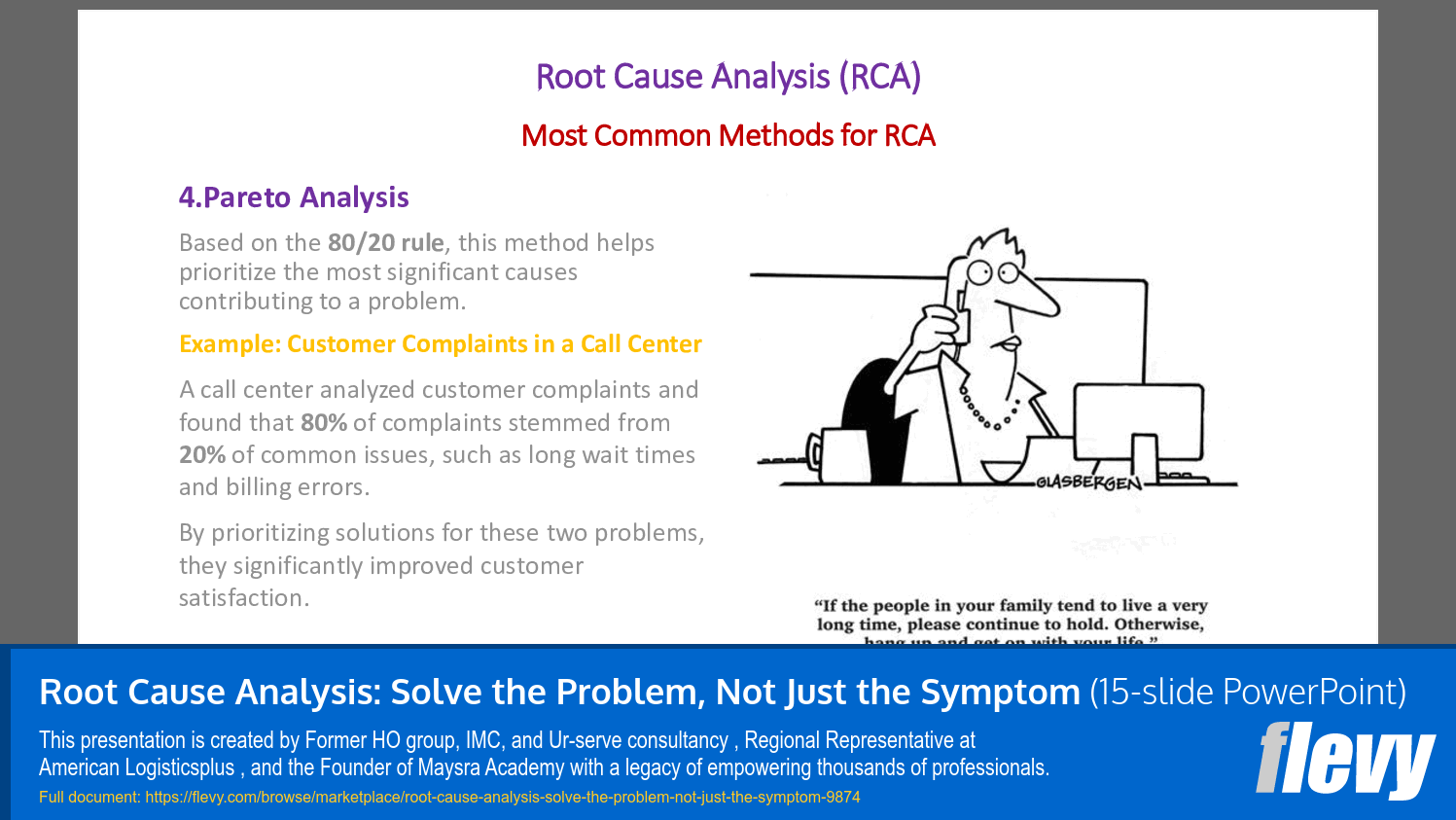
•  Pareto Analysis slide demonstrating the 80/20 rule in customer complaints
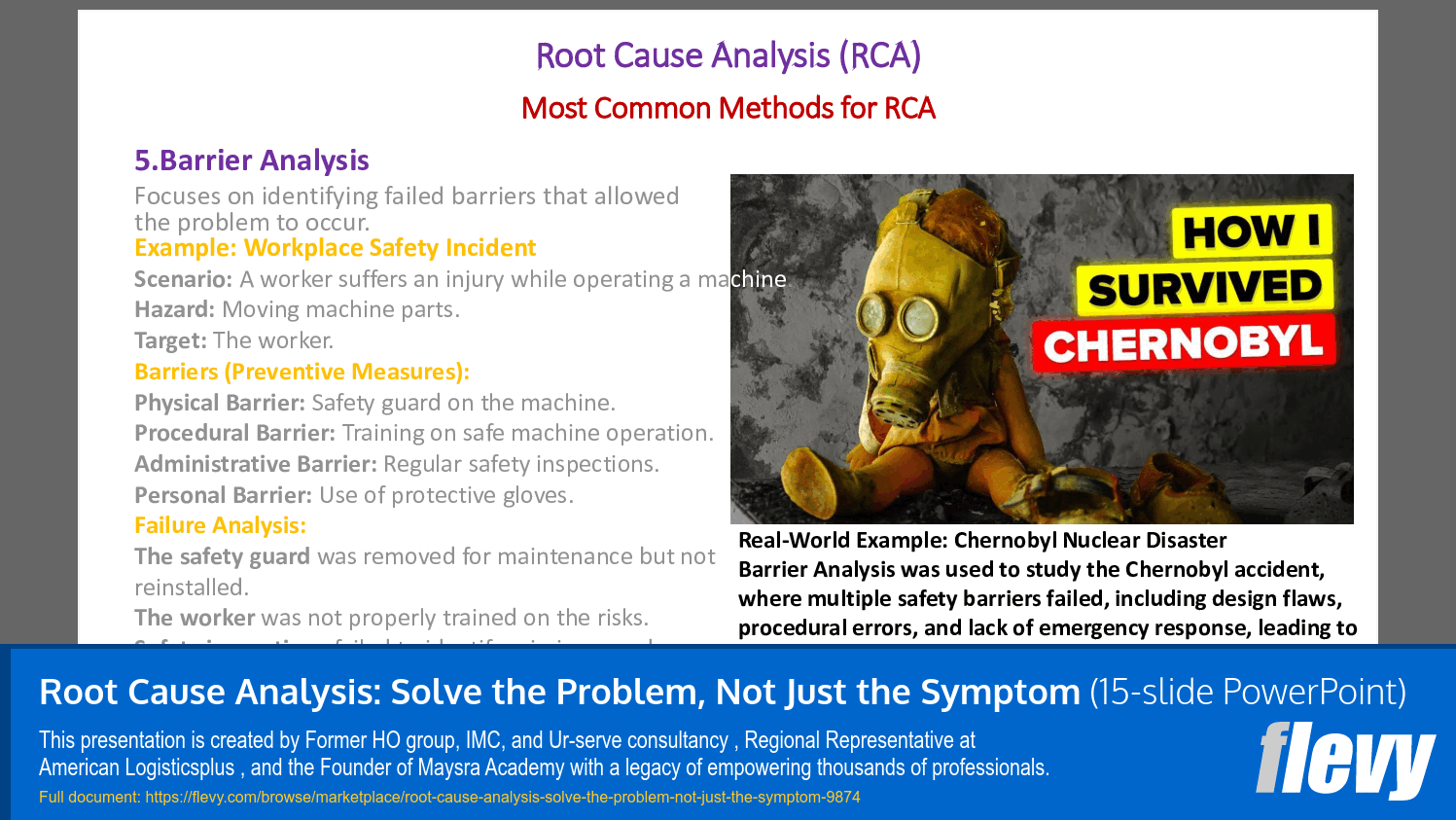
•  Barrier Analysis case study on workplace safety incidents
•  Fault Tree Analysis diagram for a power system failure scenario
•  Affinity Diagram example for improving customer service in a call center

Potential Workshop Agenda
Introduction to RCA (30 minutes)
•  Overview of RCA principles and importance
•  Discussion on common challenges in problem-solving

RCA Techniques Deep Dive (60 minutes)
•  Interactive session on the 5 Whys and Fishbone Diagram
•  Group activities to practice FMEA and Pareto Analysis

Case Study Analysis (45 minutes)
•  Review real-world examples of RCA applications
•  Group discussions on findings and proposed solutions

Action Planning (30 minutes)
•  Develop individual action plans for implementing RCA techniques
•  Set goals for follow-up and accountability

Customization Guidance
•  Adapt the RCA framework to align with specific organizational processes
•  Modify case studies to reflect industry-specific challenges
•  Incorporate company-specific terminology and metrics into templates
•  Tailor workshop activities to fit team dynamics and learning preferences

Secondary Topics Covered
•  Continuous improvement methodologies related to RCA
•  The role of data analysis in effective problem-solving
•  Techniques for facilitating RCA workshops and training sessions
•  Best practices for documenting and communicating RCA findings

Topic FAQ

What are the most common root cause analysis techniques I should know about?

Common RCA techniques include the 5 Whys, Fishbone (Ishikawa) diagrams, Failure Mode and Effects Analysis (FMEA), Pareto Analysis, Barrier Analysis, Fault Tree Analysis (FTA), and Affinity Diagrams. These methods provide different analytical lenses for causal discovery and are represented together as 7 methods in the presentation’s primary topics.

How should a team run a 5 Whys session to find a root cause?

Start with a clear problem statement, ask "Why?" iteratively to trace cause-and-effect, document each answer, and stop when an actionable root cause emerges. The presentation provides facilitation guidance and a 5 Whys worksheet to capture the inquiry and findings during team sessions.

How does Pareto Analysis help prioritize which issues to fix first?

Pareto Analysis applies the 80/20 principle to identify the small set of causes that produce most issues, enabling focused remediation. Use frequency data to build a Pareto chart, which the presentation includes as a template for prioritizing the highest-impact problems.

What should I look for when choosing an RCA template or deck for my team?

Choose a deck that includes multiple analytic methods (e.g., 5 Whys, Fishbone, FMEA), ready-to-use templates, case studies, a sample workshop agenda, and customization guidance. The presentation "Root Cause Analysis: Solve the Problem, Not Just the Symptom" lists these elements and provides templates for 5 Whys, Fishbone Diagram, and FMEA.

How much time should I schedule for an RCA workshop with hands-on practice?

The sample workshop agenda suggests an introductory segment (30 minutes), a techniques deep dive with group practice (60 minutes), case study analysis (45 minutes), and action planning (30 minutes), totaling about 165 minutes. The presentation includes this timed agenda for workshop planning.

Can RCA methods help reduce recurring project delays, and which techniques work best?

Yes; RCA methods identify underlying causes so teams can prevent recurrence. For recurring delays, iterative questioning via the 5 Whys and process-mapping with a Fishbone Diagram help surface bottlenecks and human/process causes. Templates for both 5 Whys and Fishbone Diagram are provided in the materials.

Are pre-built RCA templates generally cost-effective compared with building tools from scratch?

Pre-built templates provide ready structure and facilitation aids that can reduce time spent designing workshops and documenting findings, helping teams save effort and resources. The presentation bundles practical templates such as FMEA and Pareto Chart to accelerate analysis and documentation.

What is the recommended way to document RCA findings and ensure follow-up?

Capture root causes, assign owners, set measurable metrics, and create an action plan with timelines. The deck includes an RCA framework template and recommends dedicating an action-planning session (30 minutes in the sample agenda) to convert findings into tracked tasks.

Document FAQ
These are questions addressed within this presentation.

What is Root Cause Analysis?
Root Cause Analysis (RCA) is a systematic approach to identifying the underlying causes of problems to prevent recurrence and improve overall efficiency.

How do I implement the 5 Whys technique?
The 5 Whys technique involves asking "Why?" repeatedly (typically 5 times) to drill down to the fundamental cause of an issue, helping teams understand the root problem.

What is a Fishbone Diagram?
A Fishbone Diagram, also known as an Ishikawa Diagram, is a visual tool that categorizes potential causes of a problem into groups, facilitating a structured analysis.

What is FMEA?
Failure Mode and Effects Analysis (FMEA) is a structured approach used to identify potential failure points in a process and assess their impact on operations.

How does Pareto Analysis work?
Pareto Analysis is based on the 80/20 rule, which suggests that 80% of problems stem from 20% of causes. This method helps prioritize solutions for the most significant issues.

What is Barrier Analysis?
Barrier Analysis focuses on identifying failed preventive measures that allowed a problem to occur, enhancing safety and operational effectiveness.

What is Fault Tree Analysis?
Fault Tree Analysis (FTA) is a deductive method used to identify root causes of undesired events through logical diagrams that map out potential failures.

How can I use Affinity Diagrams?
Affinity Diagrams help organize large amounts of data into meaningful categories, allowing teams to identify patterns and prioritize solutions effectively.

Glossary
•  Root Cause Analysis (RCA) - A systematic approach to identifying the underlying causes of problems.
•  5 Whys - A technique for drilling down to the root cause by repeatedly asking "Why?"
•  Fishbone Diagram (Ishikawa) - A visual tool for categorizing potential causes of a problem.
•  Failure Mode and Effects Analysis (FMEA) - A method for identifying potential failure points and their impacts.
•  Pareto Analysis - A technique based on the 80/20 rule for prioritizing significant causes of problems.
•  Barrier Analysis - Identifying failed barriers that allowed problems to occur.
•  Fault Tree Analysis (FTA) - A deductive method for identifying root causes of undesired events.
•  Affinity Diagram - A tool for organizing data into meaningful categories to identify patterns.
•  Preventive Measures - Actions taken to prevent problems from occurring.
•  Impact Assessment - Evaluating the potential effects of identified failure points.
•  Continuous Improvement - Ongoing efforts to improve products, services, or processes.
•  Data Analysis - The process of inspecting, cleansing, and modeling data to discover useful information.
•  Problem-Solving - The process of finding solutions to difficult or complex issues.
•  Team Dynamics - The behavioral relationships between members of a team.
•  Action Plan - A detailed plan outlining steps to achieve specific goals.
•  Workshop - A meeting for discussion or training on a particular subject.
•  Case Study - An in-depth analysis of a particular instance or example.
•  Training Session - A structured period of instruction on a specific topic.
•  Documentation - The process of providing evidence or information in written form.
•  Metrics - Standards of measurement used to assess performance.

Source: Best Practices in RCA PowerPoint Slides: Root Cause Analysis: Solve the Problem, Not Just the Symptom PowerPoint (PPTX) Presentation Slide Deck, Mohamed Abu Rahal Consulting


$25.00
This presentation is created by Former HO group, IMC, and Ur-serve consultancy , Regional Representative at American Logisticsplus , and the Founder of Maysra Academy with a legacy of empowering thousands of professionals.
Add to Cart
  

ABOUT THE AUTHOR

Author image
Additional documents from author: 13

Regional representative at Logistics-plus (an American leader company) driving strategic growth and partnerships across MENA region , Co-founder of "Ur-serve" for business development consultancy helping organizations grow through enhancing performance, building awareness, and fostering teamwork , Founder of "Maysra Academy" Renowned for turning strategic insight into practical impact , ... [read more]

Ask the Author a Question

You must be logged in to contact the author.

Click here to log in Click here register

Did you know?
The average daily rate of a McKinsey consultant is $6,625 (not including expenses). The average price of a Flevy document is $65.

Bundle and save! You can save up to % with bundles!

View bundle(s)


Trusted by over 10,000+ Client Organizations
Since 2012, we have provided business templates to over 10,000 businesses and organizations of all sizes, from startups and small businesses to the Fortune 100, in over 130 countries.
AT&T GE Cisco Intel IBM Coke Dell Toyota HP Nike Samsung Microsoft Astrazeneca JP Morgan KPMG Walgreens Walmart 3M Kaiser Oracle SAP Google E&Y Volvo Bosch Merck Fedex Shell Amgen Eli Lilly Roche AIG Abbott Amazon PwC T-Mobile Broadcom Bayer Pearson Titleist ConEd Pfizer NTT Data Schwab


Read Customer Testimonials

 
"FlevyPro has been a brilliant resource for me, as an independent growth consultant, to access a vast knowledge bank of presentations to support my work with clients. In terms of RoI, the value I received from the very first presentation I downloaded paid for my subscription many times over! The "

– Roderick Cameron, Founding Partner at SGFE Ltd
 
"One of the great discoveries that I have made for my business is the Flevy library of training materials.

As a Lean Transformation Expert, I am always making presentations to clients on a variety of topics: Training, Transformation, Total Productive Maintenance, Culture, Coaching, Tools, Leadership Behavior, etc. Flevy "

– Ed Kemmerling, Senior Lean Transformation Expert at PMG
 
"If you are looking for great resources to save time with your business presentations, Flevy is truly a value-added resource. Flevy has done all the work for you and we will continue to utilize Flevy as a source to extract up-to-date information and data for our virtual and onsite presentations!"

– Debbi Saffo, President at The NiKhar Group
 
"FlevyPro provides business frameworks from many of the global giants in management consulting that allow you to provide best in class solutions for your clients."

– David Harris, Managing Director at Futures Strategy
 
"I like your product. I'm frequently designing PowerPoint presentations for my company and your product has given me so many great ideas on the use of charts, layouts, tools, and frameworks. I really think the templates are a valuable asset to the job."

– Roberto Fuentes Martinez, Senior Executive Director at Technology Transformation Advisory
 
"The wide selection of frameworks is very useful to me as an independent consultant. In fact, it rivals what I had at my disposal at Big 4 Consulting firms in terms of efficacy and organization."

– Julia T., Consulting Firm Owner (Former Manager at Deloitte and Capgemini)
 
"My FlevyPro subscription provides me with the most popular frameworks and decks in demand in today’s market. They not only augment my existing consulting and coaching offerings and delivery, but also keep me abreast of the latest trends, inspire new products and service offerings for my practice, and educate me "

– Bill Branson, Founder at Strategic Business Architects
 
"Last Sunday morning, I was diligently working on an important presentation for a client and found myself in need of additional content and suitable templates for various types of graphics. Flevy.com proved to be a treasure trove for both content and design at a reasonable price, considering the time I "

– M. E., Chief Commercial Officer, International Logistics Service Provider


Save with Bundles

This document is available as part of the following discounted bundle(s):


Customers Also Bought These Documents


Customers Also Like These Documents

Explore Templates on Related Management Topics


Your Recently Viewed Documents
Receive our FREE presentation on Operational Excellence

This 50-slide presentation provides a high-level introduction to the 4 Building Blocks of Operational Excellence. Achieving OpEx requires the implementation of a Business Execution System that integrates these 4 building blocks.